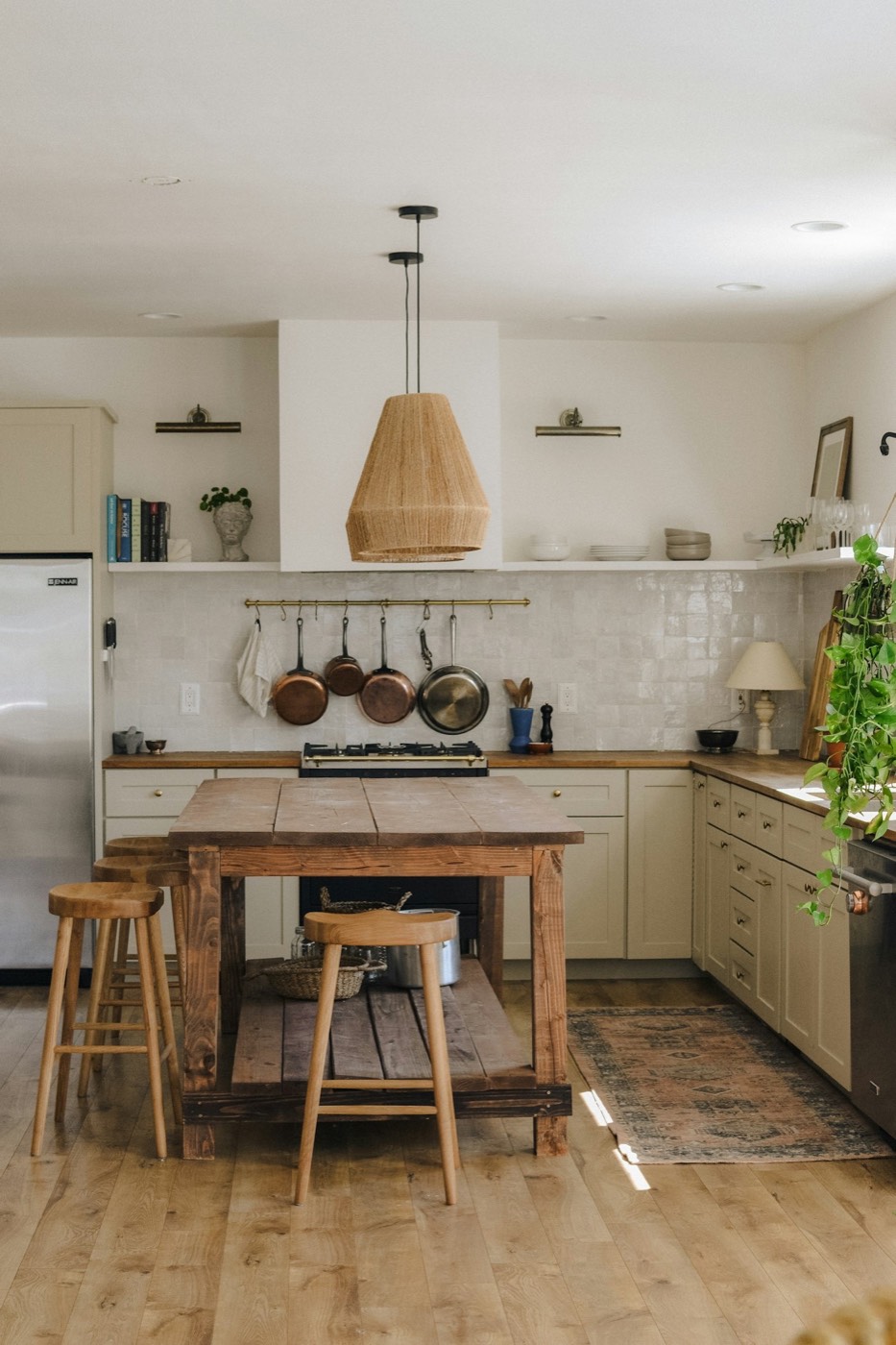
A kitchen is expected to last fifteen or twenty years, which is longer than most design fashions. The trick is not to avoid personality, but to put it where it is cheap to change and keep the expensive, built-in parts calm. Here is how we think about it with the people we design for.
Spend on what is hard to replace
Cabinet boxes, drawer runners, the counter and the layout itself are the parts that are disruptive to change. They deserve the budget. A well-built cabinet with soft-close runners will outlive two sets of door fronts, and a sensible layout will still work when the household changes.
- Full-extension drawers in base units, rather than deep cupboards with a single shelf.
- A counter material that suits how you cook: stone for heat and wear, wood for warmth with some care, solid surface for seamless sinks.
- Enough circuits and outlets for appliances you do not own yet.
Keep the fixed surfaces quiet
Bold tile and strong cabinet colours can look wonderful, and they are the first things to feel dated. If you love a colour, consider it on an island, a painted wall or open shelving, which can all change in a weekend. Let the backsplash and the perimeter cabinets be the backdrop.
Hide what clutters
Kitchens age faster when every surface is covered. An appliance garage for the toaster and coffee machine, a drawer for charging phones, and a tall pantry cabinet do more for the long-term look of the room than any finish.
Light it in layers
Overhead lights for the room, under-cabinet lights for the work surfaces, and a pendant or two over the island or table, each on its own switch. Lighting is inexpensive to plan while the walls are open and costly to add afterwards.
Choose hardware last, and keep it replaceable
Handles and knobs are the jewellery of a kitchen. Standard hole spacing means they can be swapped in an afternoon when your taste moves on, which makes them the simplest refresh a kitchen can have.